

Economic Development, Planning and Human Settlements
- Home
- Economic Development, Planning and Human Settlements
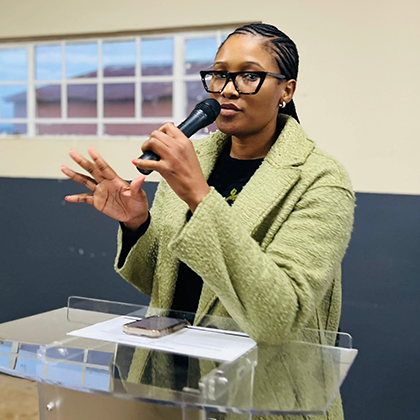
Ms. Sinenhlanhla Dlamini
Director: Economic Development, Planning and Human Settlements
1. ECONOMIC DEVELOPMENT, PLANNING & HUMAN SETTLEMENTS (DEPARTMENT HUB)
The Department of Economic Development and Planning is committed through legislative requirements and sound municipal policy to providing people-focused, quality services and sustainable socio-economic development. The Departments seeks to build sustainable communities, enable inclusive growth and planning for a well-managed uMngeni.
Our work is delivered through the following core functions:
• Environmental Management
• Town Planning
• Building Regulation
• Local Economic Development & Investment Promotion
• Human Settlement
2. ECONOMIC DEVELOPMENT (OVERVIEW)
The purpose of the Economic Development Unit is to build the economic capacity of the municipality to improve its economic future and the quality of life for all its citizens. How we support you:
• Provide business and sector support through LED programmes and partnerships.
• Promote and facilitate tourism-related initiatives, events, and destination development.
• Support agricultural development initiatives aligned to local opportunities.
• Facilitate investor enquiries and connect investors to relevant internal processes.
a) Local Economic Development (LED)
LED is one of the municipality’s core functions within the Department of Economic Development & Planning. This section provides practical support pathways for starting, formalising, sustaining, and growing local economic activity working with partners across government, the private sector, and civil society. Our LED focus areas include:
SMME & Co-operatives Support
The municipality supports local business development as part of its Local Business Support & SMME Development programme area.
This support includes:
• Business compliance guidance (what you need to operate legally and safely, and where to obtain it)
• Referral and coordination for training opportunities and enterprise development support (where available through partners)
• Linkages to municipal opportunities communicated through notices and official channels; and
• Technical assistance and market access opportunities.
Agricultural Support
Agricultural development is a recognised programme area within the municipality’s Economic Development work. The municipality supports agricultural activity through: (i) guidance on engaging the municipality on land-related and planning processes that affect agricultural operations; (ii) coordination and referrals to relevant sector partners where technical programmes are available; and (iii) supporting initiatives aligned to local opportunities and municipal priorities including programmes targeted at providing input, equipment and mechanisation support as well as training support.
Business & Informal Economy Support (including business registration guidance)
This sub-unit supports local economic activity by helping business owners understand compliance pathways and municipal processes that may affect trading and business premises. The unit provides business licensing and trading permit registration support. It provides guidance on basic compliance steps (business compliance considerations including: zoning considerations, building and safety requirements, health/fire requirements depending on your business type) and links businesses to the relevant authorities. It provides referral to relevant registration channels (e.g., where to register, what supporting documents are typically required, and how to proceed). As well as, providing advice on municipal processes that apply to your business site/premises (planning permissions, building plan approvals, and related processes).
Important note
Business registration itself may be completed through the relevant provincial registration channels; the municipality provides guidance, referrals, and support on municipal processes that apply to your premises and operations.
Tourism Development & Support
Tourism Development is a core programme area within the municipality’s Economic Development work. The unit is responsible for marketing and promoting the UNESCO craft City Status and all municipal owned tourism assets. The unit further co-ordinates municipal consideration of proposals for tourism-related events seeking support or sponsorship (financial /services/ marketing).
LED Forum
The municipality periodically calls for interested business-sector representatives to participate in the LED Forum to strengthen capacity and skills for local economic development initiatives.
NB: the latest LED strategy is available on the link below:
b) Investment Promotion & Expansion
The municipality positions itself as proactive in regional, provincial, national and international engagements, and aims to be viewed as a preferred investment destination through support policy and proactive marketing efforts. The unit responds to investor enquiries and facilitate referrals to the relevant municipal functions. It provides a high-level guidance on planning, land use, and development process requirements to support investment promotion and marketing as a dedicated programme area.
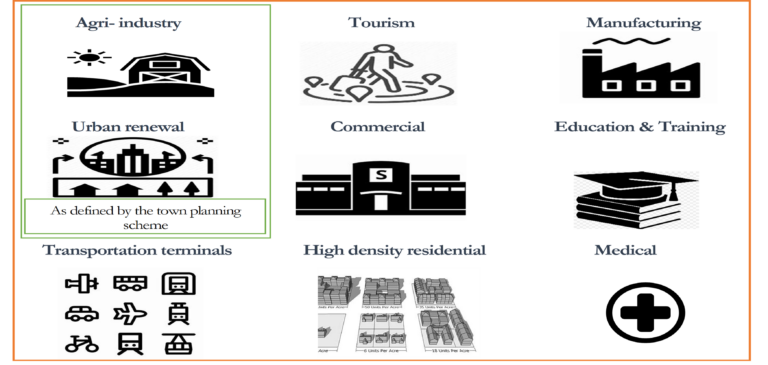
To fast-track infrastructure development and revitalization that supports socio-economic growth and stability, the Municipality has created an Incentive Policy to encourage private sector partnerships and investment. The incentives are summarised below:
| Geographic targets | This is when an area within the municipality is demarcated as a location for further development and investment |
| Entrepreneurial targets | This entails focusing on specific types of enterprises as a means of encouraging certain kinds of investment to an area. |
| Business targets | This involves identifying the most relevant sectors of the economy and addressing both the flow and maintenance of business activity within a community. |
| Occupational targets | This concerns economic development within the context of employment. This does not involve the targeting of a specific area, enterprise or sector. |
| Classification according to investment |
Class 1 minimum |
Class 2 Minimum |
Class 3 Minimum |
Class 4 Minimum |
Class 5 Minimum |
|---|---|---|---|---|---|
| MINIMUM RATABLE INVESTMENT | |||||
| Tourism | R1M | R2M | R5M | R10M | R20M |
| Agri-industry | R5M | R10M | R25M | R50M | R100M |
| Manufacturing | R5M | R10M | R25M | R50M | R100M |
| Urban Renewal | R5M | R10M | R20M | R35M | R50M |
| Commercial | R10M | R20M | R50M | R100M | R250M |
| Education & Training | R5M | R10M | R50M | R100M | R150M |
| Transportation terminals |
R10M | R20M | R50M | R100M | R150M |
| High density residential |
R20M | R50M | R100M | R150M | R250M |
| Number of permanent, direct employment opportunities added | |||||
|---|---|---|---|---|---|
| INDUSTRY | Class 1 minimum |
Class 2 Minimum |
Class 3 Minimum |
Class 4 Minimum |
Class 5 Minimum |
| All industries | 40 | 50 | 65 | 80 | 100 |
NB: It is a condition of this incentive that only employment opportunities filled by South African residents will count towards the minimum number of employment opportunities created in relation to unskilled labour.
| CLASS | YEAR 1 | YEAR 2 | YEAR 3 |
|---|---|---|---|
| Class 1 | 25% | 10% | 5% |
| Class 2 | 35% | 25% | 10% |
| Class 3 | 50% | 35% | 20% |
| Class 4 | 75% | 50% | 25% |
| Class 5 | 100% | 75% | 25% |
Click for Economic Development – Forms, Notices, Documents & Downloads
3. PLANNING AND REGULATION (OVERVIEW)
a) Town Planning
Municipal Planning is a function assigned to municipalities in terms of Section 156 of the Constitution and includes land use control measures such as zoning, township establishment, and the regulation of development.
To give effect to this mandate, the municipality provides Spatial Planning and Land Use Management application processes for development and land-use related matters. These include applications for scheme amendments, consent uses, subdivisions, consolidations, and other related land development applications. Municipal planning functions are carried out in terms of the Spatial Planning and Land Use Management Act (SPLUMA), which serves as the overarching legislation governing spatial planning and land use management in South Africa.
The uMngeni Municipality has a well-capacitated Planning Division responsible for land use management, spatial planning, development administration, and enforcement. Land Use Management within the municipality deals primarily with the preparation, implementation, and maintenance of the Land Use Scheme. The uMngeni Municipality adopted its Single Land Use Scheme in 2020, which was subsequently reviewed in 2024. The scheme aims to create a harmonious environment where land uses and development are properly integrated, ensuring sustainable development and compliance with municipal planning regulations.
The municipality seeks to ensure that all development proposals are consistent with the broader municipal vision as outlined in the Spatial Development Framework (SDF). Spatial planning therefore forms a key function of the unit, guiding long-term growth, land use patterns, and infrastructure planning within the municipality.
The Geographic Information Systems (GIS) component supports the planning function by providing visual representations of spatial plans, land use maps, and aerial photography. GIS enables the municipality to develop spatial plans and maps that reflect the municipality’s development vision. It also assists members of the public in determining property boundaries and accessing spatial data or mapping information when required.
The enforcement component of the Planning Division is responsible for ensuring compliance with the Land Use Scheme and municipal bylaws. This function addresses cases where property owners undertake building alterations without the required approvals or use their properties for purposes not permitted by the scheme, such as offices, bed-and-breakfast establishments, or day-care facilities, without obtaining the necessary municipal authorization. Enforcement ensures that development takes place in a lawful and regulated manner, protecting both community interests and the integrity of the municipal planning system.
b) Building Control
Building Control:
The Building Control Unit oversees development within the uMngeni Municipality’s boundaries. We are governed by the National Building Regulations, The Building Standards Act No. 103 of 1977 and the uMngeni Municipality’s By-Laws. This unit comprises of two sub-sections:
Building Inspectorate
The Building Inspectorate section monitors development within the uMngeni Municipal boundary. This includes private and government section developments. The unit ensures that the construction of buildings are as per the approved building plan (Plan Approval Section) and complies with the National Building Regulation, Act 103 of 1977 and other relevant legislation. The submission and eventual approval of building plans is a statutory requirement of which the Building Control unit within the Economic Development, Planning and Human Settlements, is the custodian. The Act promotes uniformity in the law relating to the erection of buildings in the jurisdiction of the municipality, and to prescribe standards and matters related thereto. Building Control ensures these standards are met by approving application, as well as on-site inspections, but does not include quality assessments of the building practice.
The section is responsible for the following:
• Ensuring that Buildings are structurally sound.
• Issuing of Final Occupation Certificate.
• Inspection of buildings, to ensure that they meet the minimum standards as set out in the approved documents. Inspections are done at the following stages (Foundation, Floor slab, Roof, Sewer/Stormwater drainage and Occupation)
• Pre-scrutiny inspection of proposed building plan applications.
• We attend to public complaints relating to illegal building works, dumping of rubble on road verge and stormwater problems.
• Monitor demolition of building works and relevant approval form AMAFA (National Monuments Council)
We provide comments to the following department applications:
• Rates Department (Building Inspection)
• Land Survey (Subdivisions and Consolidation)
• Town Planning (All PDA application)
• Licensing (All business license applications)
Signage and Outdoor Advertising Control:
The Signage Unit is mandated to oversee outdoor advertising within the uMngeni Municipality’s boundaries. We are governed by the South African Manual for Outdoor Advertising Control, a national guideline document compiled and published in 1998 by the Department of Environmental Affairs and Tourism, National Road Traffic Act, 1998 (act No. 93 of 1996) and the Regulations promulgate, The South African National Roads Agency Limited and National Roads Act (Act No. 7, 1998), National Building Regulation and Building standards Act 1977 as well as the Occupational Health and Safety Act. 1993 (Act No. 85 of 1993) and the uMngeni Municipality Outdoor Advertising By-laws.
The Municipality has three areas of control which are maximum, partial and minimum control. These areas of control are determined by the landscape character sensitivity:
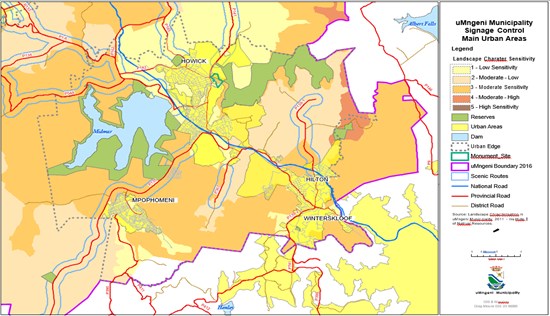
The Municipality has introduced new and modern advertising methods to keep up with the forever evolving advertising methods. These include but not limited to digital advertising trailers, street pole advertising.
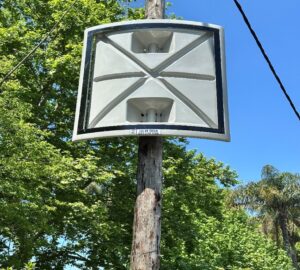
Advertising Frame along Hilton Avenue.
This Section is responsible for the following:
• Oversees the outdoor advertising application processes.
• We carry out inspection of new and existing signs.
• We attend to public complains relating to signage, encroachments, and illegal structures.
• We monitor the erection of new signs.
• Removal of illegal signs.
• We respond and comment on signage queries from other departments.
• Outdoor Advertising By-laws.
• Application process.
• Standard application requirements.
• Signage tariffs.
Click for Planning & Building Control – Forms, Notices, Documents & Downloads
4. HUMAN SETTLEMENTS (OVERVIEW)
a) Human Settlements (Housing Support & Coordination)
Human settlements require coordination across spheres of government. The housing unit provides support to residents through guidance on housing enquiries and document readiness (where applicable). Providing referrals and coordination with relevant provincial/national channels as well as supporting to align settlement needs with municipal planning and services coordination.
B) Geographic Context: uMngeni Municipality is located in the KwaZulu-Natal province of South Africa. It encompasses towns such as Howick, Merrivale and Nottingham Road, among others.
c) Demographic Insights: The municipality has a diverse population and mix of urban and rural communities. Understanding the demographic profile is crucial for tailoring housing delivery to meet local needs.
d)Existing Housing Stock: Overview of housing types available (formal, informal resettlements, government -subsidised housing).
e) Condition of Housing: Assessing the quality and condition of existing housing structures including access to basic services such as water and electricity.
f) Housing Demand: Analyse housing demand, highlight increase due to population growth, and urban migration.
g) Land Availability: Identifying suitable land for housing development can be an constraint due to competing land use (agriculture, conservation).
Funding and Resources: Limited financial resources for housing projects, often relying on government subsidies.
h) Community Participation: Engaging local communities in planning and development to ensure that housing solutions address their specific needs.
I) Policy Alignment: Ensuring local housing policies align with national and provincial framework, including the National Housing Code and integrated Development Plan (IDPs).
J) Sustainable Development: Emphasising building practices and ensuring developments are environmentally friendly and resilient to climate change.
K) Upgrading Informal Settlement: Implementing strategies to upgrade informal settlements while providing secure tenure and basic services.
Click for Housing – Forms, Notices, Documents & Downloads
5. ENVIRONMENTAL UNIT (OVERVIEW)
Environmental Management is another function of the Department of Economic Development & Planning. The unit provides support through Environmental planning and awareness initiatives, support for invasive alien plant monitoring and control initiatives, receiving and routing environmental complaints and reports and co-ordination with relevant partners and sector departments where required.
Our Environmental Management focus areas include:
Environmental Compliance & Development Support
The Environmental Unit provides guidance and coordination regarding environmental considerations associated with development activities within the municipality.
The unit supports this area by:
• providing guidance on environmental regulatory processes and environmental compliance requirements;
• facilitating coordination with relevant environmental authorities where environmental authorisation processes apply;
• supporting integration of environmental considerations within municipal planning and development processes; and
• promoting sustainable development practices within the municipality.
NB: The enforcement of Environmental Health By-Laws, Air Quality Management By-Laws, and Water Services By-Laws falls under the jurisdiction of the District Municipality. The uMngeni Local Municipality facilitates engagement and escalates environmental complaints to the relevant District authorities for investigation and enforcement.
Biodiversity Management
Biodiversity conservation is an important component of environmental sustainability within the municipality. The Environmental Unit supports the protection and responsible management of natural ecosystems, indigenous species, and environmentally sensitive areas.
The unit supports biodiversity management through:
• promoting conservation of natural habitats and ecological infrastructure within the municipal area;
• supporting initiatives aimed at protecting indigenous plants and animal species;
• promoting responsible land use and environmental stewardship within communities; and
• collaborating with environmental stakeholders and conservation organisations to support biodiversity protection initiatives.
Climate Change & Environmental Sustainability
The municipality recognises the importance of addressing climate change and promoting environmental sustainability in local development.
The Environmental Unit supports climate-related initiatives through:
• development and implementation of municipal climate change policies and action plans;
• promoting climate resilience and sustainable resource management;
• integrating climate considerations into municipal planning processes; and
• supporting initiatives that contribute to environmental sustainability and climate change mitigation.
Environmental Awareness & Education
The municipality encourages residents and stakeholders to report environmental concerns that may negatively affect the environment or public health.
Environmental complaints may include issues such as:
• coordination of environmental awareness campaigns and community outreach programmes;
• facilitation of school-based environmental education initiatives and environmental events;
• promotion of global environmental days and environmental campaigns; and
• collaboration with stakeholders to promote environmental stewardship within communities.
Environmental Complaints & Reporting
The municipality encourages residents and stakeholders to report environmental concerns that may negatively affect the environment or public health.
Environmental complaints may include issues such as:
• Pollution incidents
• Environmental degradation
• Unlawful environmental activities
The Environmental Unit assists by:
• receiving and recording environmental complaints from the public;
• conducting preliminary assessments of reported environmental issues;
• coordinating with relevant municipal departments (i.e. uMgungundlovu District Municipality) or environmental authorities (i.e. Department of Economic Development, Tourism and Environmental Affairs) where intervention is required; and
• providing guidance on appropriate channels for addressing environmental concerns.
ULM STATUS QUO OF THE NATURAL ENVIRONMENT
Topography
ULM feature a predominantly hilly to undulating landscape with an average elevation of approximately 1,083 m (3,553 ft). The area is characterized by the uMngeni River valley, the 94m waterfall, and rolling farmland. It is located approximately 1,042 m (3,419 ft) to 1,211m (3,973 ft) above sea level.
Drainage across the municipality is influenced by the predominantly rolling topography, with watercourses draining toward the uMngeni River system and contributing to the broader catchment.
The presence of gentle slopes and valley formations affects surface runoff and stormwater flow patterns, presenting considerations for land use planning and infrastructure development.
The landscape supports a mix of rural, agricultural and urban uses, with steeper gradients generally found near river valleys and the more level terrain occurring across midland plains and undulating hillocks.
Ecological
The uMngeni Local Municipality is situated within the uMngeni River catchment, a critical freshwater system that drains into the Indian Ocean. This river network, along with associated wetlands, grasslands, forests, and riparian zones, forms vital ecological infrastructure that supports biodiversity, regulates water flow, and provides ecosystem services such as water purification, flood control, and soil stability.
The municipality’s landscape consists of undulating hills, valleys, and floodplains, with variations in slope and topography influencing drainage patterns and habitat distribution. Watercourses and wetlands in the municipality are highly sensitive to urban development, agriculture, and infrastructure expansion. Upper river reaches remain largely natural, while downstream sections are affected by sedimentation, nutrient enrichment, pollution, and altered flow regimes, resulting in fair to poor ecological health.
Riparian habitats, floodplains, and wetlands are under pressure from settlement expansion, land-use changes, and invasive alien species, which compromise ecological integrity and the capacity of these systems to sustain native biodiversity. Grasslands and forest patches support a diversity of flora and fauna, including species of conservation concern, but face threats from habitat fragmentation, overgrazing, and invasive vegetation.
In alignment with the National Environmental Management Act (NEMA, Act 107 of 1998) and the National Environmental Management: Biodiversity Act (NEMBA, Act 10 of 2004), these ecosystems are recognised as strategic assets requiring protection, rehabilitation, and sustainable management. The National Water Act (Act 36 of 1998) further guides the management and protection of the uMngeni River system and associated wetlands, emphasising the importance of maintaining ecological integrity and water quality.
Ecological assessments indicate that a high proportion of river and wetland systems are critically endangered or vulnerable, reflecting the urgent need for conservation, habitat restoration, and proactive management.
NATURE RESERVES AND CONSERVATION AREAS
The uMngeni Local Municipality hosts several nature reserves, conservation areas, and ecological corridors that are critical for protecting biodiversity, maintaining ecosystem services, and supporting sustainable recreation and tourism.
Key Protected Areas in uMngeni include:
• Beacon Hill Protected Environment
A formally recognised protected environment that conserves local grasslands and biodiversity, including Critically Endangered Midlands Mistbelt Grassland, and supports municipal conservation efforts.
• uMngeni Valley Nature Reserve
Officially proclaimed as a nature reserve in 2019, this reserve follows the uMngeni River through varied habitats including Mistbelt grasslands, forest patches, and riverine vegetation. It contributes significantly to landscape biodiversity, ecological function, and tourism opportunities.
• Portions of the uMngeni River Valley
Identified as a formal conservation area due to its ecological sensitivity and role in water regulation, habitat connectivity, and biodiversity support across wetlands and riparian ecosystems.
• Karkloof Nature Reserve (and adjoining conservation areas)
Part of the broader regional network of protected land, Karkloof and surrounding reserves form important habitat corridors supporting grassland and forest biodiversity in the Midlands.
• Hilton College Estate Conservation Area
A significant private conservation estate near Hilton that contributes to biodiversity stewardship by maintaining natural habitats in the municipality.
Click for Environmental support – Forms, Notices, Documents & Downloads
Report Electricity Faults
To report:-
▪︎ Electricity outages
▪︎ Non-functional streetlights
▪︎ Non-collection of refuse
▪︎ Vehicle accidents
▪︎ Disaster caused by floods, fires, snow or fallen trees
To report:-
▪︎ If electricity in your area is the responsibility of Eskom. Please contact them on 0860 0037 566.
▪︎ If electricity in your area is the responsibility of the Msunduzi Municipality. Please contact them on 033 392 5029 / 080 000 1868.
▪︎ Water and sanitation are the responsibility of uMgungundlovu District Municipality. Please contact them on 0800 864 911 or 033 897 6766.
Report Electricity Faults
Electrical faults in uMngeni Local Municipality are handled by uMgungundlovu District Municipality.
Cnr Dicks & Somme Streets, Howick, Kwa-Zulu Natal.
(NB: The operating hours for vehicle licensing, driver’s licence renewals, and learner’s licence applications are 07:30 to 14:30. These sections stay open until 16:00 for other services like enquiries, collections, and forms.)